 Badania Media
ZESPÓŁ BADAŃ NAD AI I KULTURĄ ALGORYTMICZNĄ
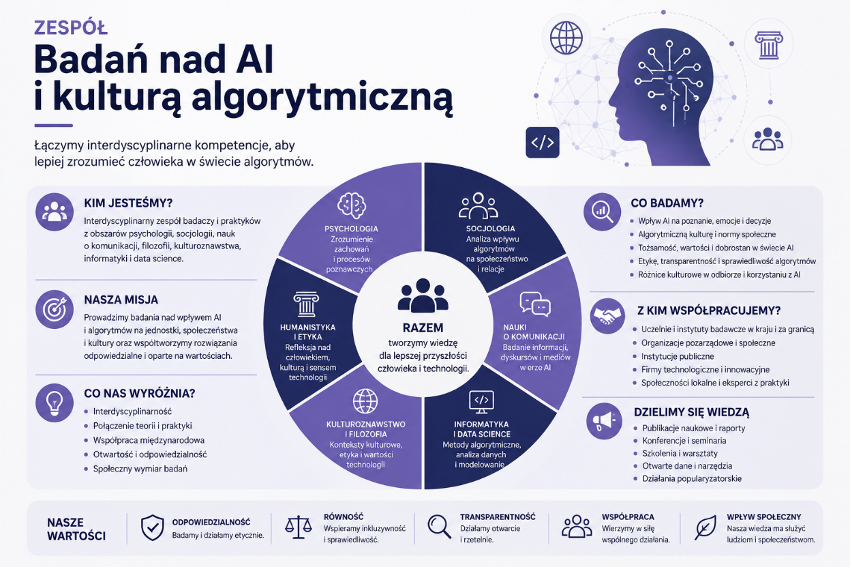
Zespół Badań nad AI i Kulturą Algorytmiczną funkcjonujący w ramach Ośrodka Badań nad Mediami prowadzi interdyscyplinarne badania nad społecznymi, kulturowymi, poznawczymi i edukacyjnymi konsekwencjami rozwoju sztucznej inteligencji w warunkach społeczeństwa algorytmicznego. Głównym przedmiotem zainteresowania zespołu jest analiza procesów, w których systemy sztucznej inteligencji oraz algorytmy stają się integralnym elementem infrastruktury poznawczej, komunikacyjnej i kulturowej współczesnych społeczeństw.
Skład Zespołu:
Prof. Katarína Fichnová, Uniwersytet Konstantina Filozofa w Nitrze
Dr Bożena Jaskowska, Uniwersytet Komisji Edukacji Narodowej w Krakowie
Prof. Agnieszka Ogonowska, Uniwersytet Komisji Edukacji Narodowej w Krakowie
Prof. Blandína Šramová, Tomas Bata Uniwersytet w Żlinie
Doc. Łukasz Wojciechowski, Uniwersytet św. Cyryla i Metodego w Trnawie
Zespół przyjmuje założenie, że rozwój generatywnej sztucznej inteligencji nie stanowi jedynie zmiany technologicznej, lecz prowadzi do głębokiej transformacji praktyk społecznych, w tym sposobów produkcji wiedzy, selekcji informacji, organizacji uwagi oraz podejmowania decyzji. W tym ujęciu AI jest rozumiana nie tylko jako narzędzie, ale również jako środowisko kulturowe, nie-ludzki aktor społeczny oraz mediator relacji poznawczych i komunikacyjnych.
Kluczowym obszarem badań zespołu jest koncepcja kultury algorytmicznej, zgodnie z którą algorytmy i systemy AI współorganizują codzienne praktyki jednostek oraz strukturyzują procesy widzialności, komunikacji i dystrybucji wiedzy. W tym kontekście analizowane są zjawiska platformizacji życia społecznego, datafikacji, automatyzacji procesów poznawczych oraz rosnącej delegacji funkcji poznawczych do systemów AI.
Istotnym filarem badań jest perspektywa rozszerzonego poznania oraz outsourcingu poznawczego, obejmująca analizę zmian w relacji człowiek–technologia, w tym przejmowanie przez systemy AI funkcji pamięci, analizy, twórczości i podejmowania decyzji. Zespół bada konsekwencje tych procesów dla autonomii poznawczej, krytycznego myślenia, refleksyjności oraz kompetencji epistemicznych użytkowników.
Drugim kluczowym obszarem działalności zespołu jest analiza relacyjnego wymiaru interakcji człowieka z AI. Badane są emocjonalne, społeczne i tożsamościowe aspekty korzystania z systemów sztucznej inteligencji, w tym procesy antropomorfizacji technologii, poziomy zaufania wobec AI, emocjonalne przywiązanie do systemów oraz redefinicja odpowiedzialności w relacji człowiek–algorytm.
Zespół rozwija również badania nad kompetencjami AI, ujmowanymi w sposób humanistyczny jako zestaw kompetencji społecznych, poznawczych, krytycznych i etycznych, nie ograniczających się do umiejętności technicznych. W tym ujęciu szczególne znaczenie przypisywane jest kompetencjom niecyfrowym, które stanowią fundament autonomicznego i refleksyjnego funkcjonowania jednostki w środowisku algorytmicznym.
Ważnym elementem badań jest także analiza edukacyjnych i kulturowych konsekwencji rozwoju AI, w tym transformacji procesów uczenia się, roli edukacji medialnej oraz zmieniających się modeli uczestnictwa w kulturze cyfrowej. Zespół bada, w jaki sposób systemy AI wpływają na praktyki edukacyjne oraz jakie kompetencje są niezbędne do odpowiedzialnego i krytycznego korzystania z technologii.
Działalność badawcza zespołu ma charakter interdyscyplinarny i integruje perspektywy medioznawcze, socjologiczne, psychologiczne, filozoficzne oraz komunikologiczne. W badaniach wykorzystywane są zarówno metody ilościowe (modele panelowe, analizy regresji, badania porównawcze), jak i jakościowe (analiza dyskursu, etnografia cyfrowa, analiza praktyk użytkowników).
Celem zespołu jest rozwój integracyjnego, humanistycznego modelu analizy sztucznej inteligencji w kulturze współczesnej, który pozwala lepiej zrozumieć mechanizmy funkcjonowania społeczeństwa algorytmicznego oraz konsekwencje rozwoju AI dla autonomii jednostki, praktyk społecznych i struktur wiedzy.
Our common projects: